Inside the MBA BC3 Contract
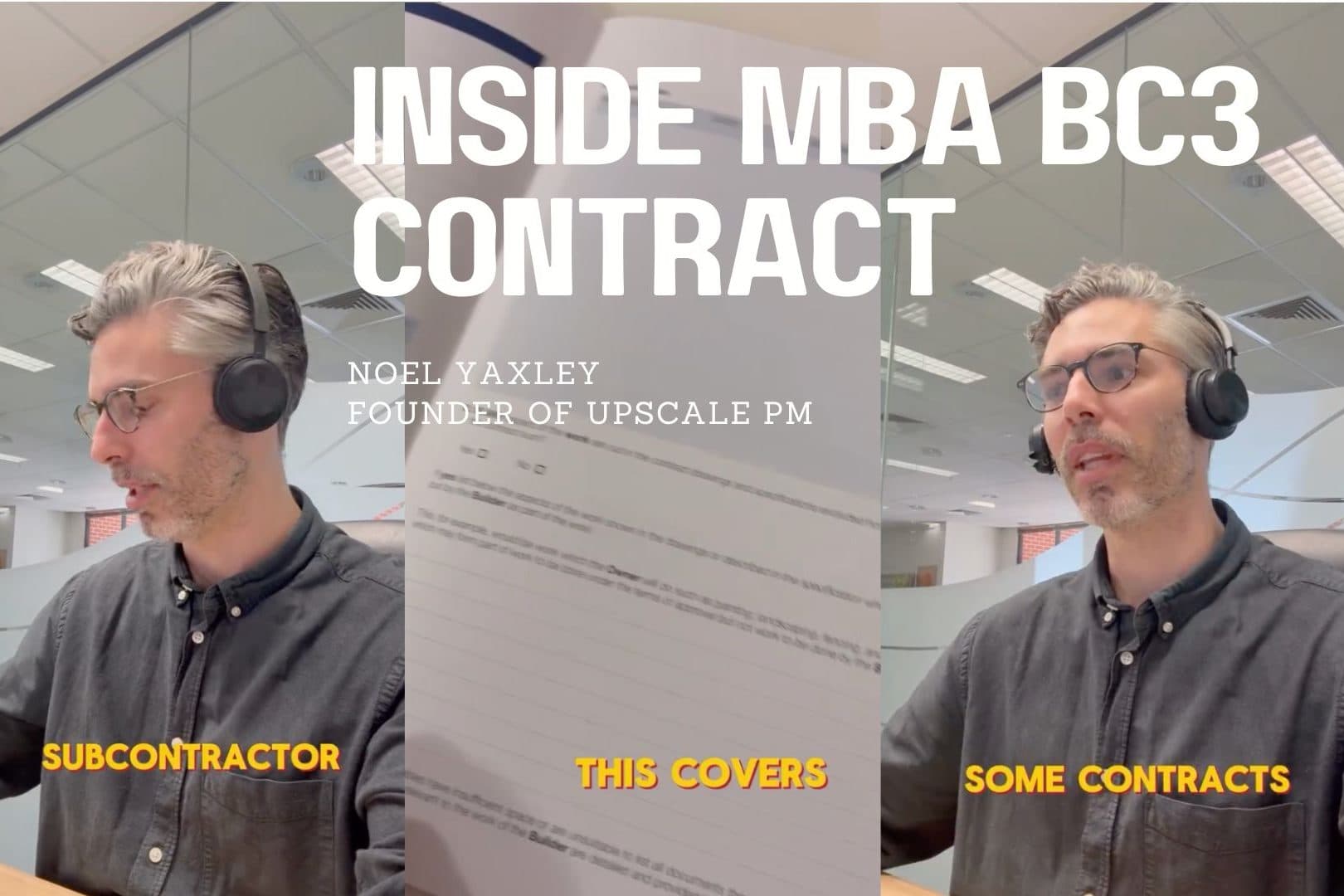
Most commercial projects in Sydney use the MBA BC3 contract, but do you actually know what's inside it?
If you're a developer, business owner, or part of a community group looking to deliver a commercial project in Sydney, chances are your builder will present you with the MBA BC3 contract. It's the industry standard for most commercial works across New South Wales.
But do you actually know what's inside it?
Too often, clients treat the contract as a formality. They assume that because it's a "standard" contract, it must automatically be balanced and fair. In reality, the BC3, like most standard forms, leans slightly in favour of the builder. Unless you understand its mechanics, you could be carrying more risk than you realise.
At UpScale Project Management, we work every day with these contracts. I'm currently walking a client, Cross Life Church, through the details of the BC3, helping them make informed decisions. Here's why this matters for every client.
Liquidated damages: protecting clients from delays
One of the most important provisions in the BC3 is liquidated damages. This clause allows you to set a daily or weekly rate payable by the builder if they run over the agreed completion date.
Why does this matter? Because time really is money. Every week of delay might mean lost rental income, extended leasing costs, or reputational damage if you're opening a new venue. Liquidated damages give you a financial safety net, but only if they're clearly defined, reasonable, and enforceable in the contract.
Delay costs: protecting builders from client delays
Contracts cut both ways. While liquidated damages protect you from builder delays, delay costs protect the builder if you cause delays. For example, if you're late in providing approvals, access, or key information, the builder can claim additional costs for time lost.
This is fair in principle, but in practice it can get complicated. What counts as a delay caused by the client? How do you prove it? Without a project manager monitoring correspondence, program updates, and site access, disputes can quickly spiral.
Retention money: making sure defects get fixed
Most BC3 contracts allow the client to hold back a percentage of each payment as retention money, usually 5% of the contract value. Half of this is released at practical completion, with the balance paid after the defects liability period (typically 12 months).
This is your safeguard that any defects, omissions, or incomplete works will actually get fixed. Without retention, the builder has little incentive to return to site after handover. But here's the catch: you need to track retention carefully, make sure it's capped correctly, and confirm the timing of release.
Variations: the budget wildcard
Every project involves changes, known as variations. Maybe a design change is required, or unforeseen conditions are discovered on site. The BC3 allows builders to charge for variations, usually with a margin (often around 10%).
Clients often underestimate the impact of variations. Ten changes at $20,000 each can quickly add up to $220,000 once margins and GST are applied. That's why a client-side project manager is essential: to check whether variations are legitimate, make sure they're priced fairly, and manage approvals in line with your budget.
Why the BC3 leans builder-friendly
Although the BC3 is widely used, it tends to favour builders in subtle ways:
- Broad definitions of delay events that can trigger extra costs.
- Limited caps on builder entitlements for variations.
- Procedural requirements that, if missed, can weaken the client's rights.
For a builder, these clauses provide flexibility and protection. For a client, they can become traps if you don't understand how to administer them.
How a client-side project manager helps
This is where a client-side project manager adds real value. At UpScale Project Management, our role is to:
- Review contracts before signing to identify risks and negotiate fairer terms.
- Administer the contract during construction to make sure the builder complies with schedules for payments, insurance, and variations.
- Protect the budget and program by checking claims, monitoring delays, and keeping the builder accountable.
- Translate the technical language of the BC3 into clear advice so you always know where you stand.
By acting solely in your interest, we balance the scales. Instead of walking into a contract blind, you sign knowing the risks, the protections, and the mechanisms for resolving disputes.
The bottom line
The MBA BC3 contract is not just paperwork. It's the rulebook that governs your entire project. If you don't understand it, you risk paying more, waiting longer, or facing disputes you could have avoided.
For Cross Life Church, having a client-side project manager involved means they can focus on their mission, knowing their project is protected. For developers, businesses, and community groups across Sydney, the same applies: don't just sign, know what you're signing.
With UpScale Project Management, you get more than administration. You get advocacy, clarity, and confidence that your project will be delivered on time, on budget, and with your best interests protected.

Director, UpScale Project Management
Architect-turned-project manager with experience across government infrastructure, commercial, and hospitality sectors. Noel founded UpScale PM to provide independent, client-side advisory for club boards navigating major redevelopment projects across NSW.